


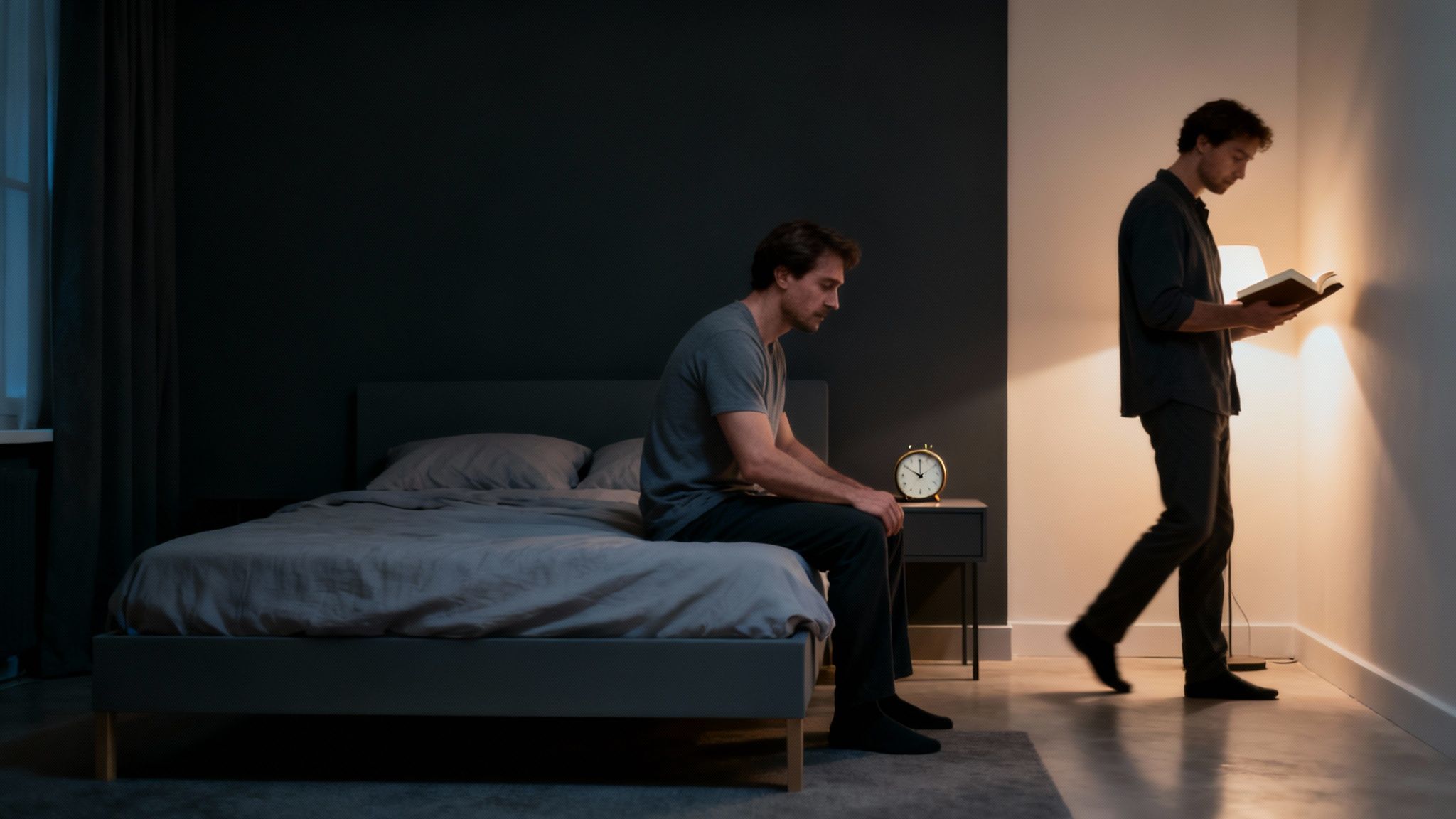
Sound familiar? You’re lying in bed, eyes wide open, and your mind is racing. If you can’t fall asleep within 20 minutes, the best thing you can do is... get up and leave the bedroom. Yes, you read that right. Your bed should be associated with rest and sleep, not with anxiety and desperate attempts to doze off.
What to do when sleep just won’t come
Instead of tossing and turning and getting frustrated with yourself for not being able to rest, it’s better to break this vicious cycle. This simple rule is one of the core principles of cognitive behavioral therapy for insomnia. When you leave the bedroom, your brain gradually stops associating the bed with frustration and alertness.
Create a calm break
Go to another room with dim, warm lighting. Never turn on bright lights or, even worse, your phone screen—blue light instantly halts melatonin (the sleep hormone) production.
So what should you do during this break?
- Read a book. Choose something calm, maybe even a bit boring, rather than a fast-paced thriller that will only make you more alert.
- Do a breathing exercise. Slow, deep breathing helps activate the parasympathetic nervous system, which is responsible for relaxation and calmness.
- Listen to soothing music or a recording of nature sounds.
- Write down your thoughts. If your mind is spinning with tomorrow’s to-do list, get it all out on paper. This will help “clear” your head and reduce anxiety.
Return to bed only when you feel sleepy again. This might happen after 15 minutes, or maybe after an hour—the most important thing is to listen to your body’s signals, not the clock.
Insomnia is often less about lack of sleep and more about a wrongly formed association between the bed and wakefulness. Your goal is to “retrain” your brain so that the bed is only for two things: sleep and intimacy.
Why this works better than suffering in bed
Trying to “force” yourself to sleep causes stress and anxiety—the biggest enemies of sleep. Once you understand what’s disrupting your rest, you can take the first steps to solve the problem. Sometimes even small environmental changes help, like comfortable, skin-friendly pillowcases that contribute to a more peaceful sleep environment. It’s important to recognize that while there’s a lack of specific data on sleep disorders in Lithuania, general recommendations are universal and truly effective.
Build a solid foundation for sleep hygiene
Good sleep is rarely a coincidence. Most often, it’s the result of consistent daily habits that experts call sleep hygiene. And no, it has nothing to do with showering before bed. It’s a system of daily rituals and rules that help your internal clock precisely align “sleep” and “wake” modes.
It all starts with one golden rule: a consistent sleep schedule. Your body loves routine. Try to go to bed and wake up at the same time every day. Yes, even on weekends.
This consistency helps regulate your circadian rhythm—the body’s natural cycle. When your schedule is chaotic, your body constantly experiences confusion, similar to what you feel after crossing several time zones.
Caffeine and alcohol—your silent sleep enemies
Most people know that coffee is stimulating, but often underestimate how long its effects last. The half-life of caffeine in the body is about 5–6 hours. What does this mean in practice? That a cup of coffee at 3 p.m. will still affect you at midnight as if you’d just had half a cup.
Alcohol is even trickier. While a glass of wine may make you feel pleasantly sleepy, it actually disrupts your sleep structure. Alcohol interferes with the REM (rapid eye movement) phase, which is critical for emotional recovery and memory. So even if you fall asleep quickly, your sleep will be shallow, and you’ll often wake up in the second half of the night.
Real-life example: if you enjoyed a large latte at 4 p.m. and try to fall asleep at 11 p.m., your nervous system may still be “switched on.” This prolonged stimulating effect is one of the most common reasons why your mind races in bed and you can’t “switch off.”
Smart physical activity
Regular exercise is one of the best natural remedies for sleep. Physical activity helps reduce stress, stabilizes mood, and naturally creates “sleep pressure”—your body’s need to rest.
The key here is timing. An intense workout less than three hours before bed can have the opposite effect. It raises your body temperature and adrenaline levels, signaling your body to “stay awake!” instead of “sleep!” The best time to exercise is in the morning or afternoon.
If you still want to move in the evening, choose gentler activities:
- A light walk in the fresh air.
- Yoga or gentle stretching exercises.
- Calming breathing exercises.
These rules are a solid foundation, but it’s also important to consider other factors. For example, sleeping well during hot nights can be a real challenge, even with the strictest routine. If this is a problem for you, it’s worth reading our tips for sleeping well in summer—there you’ll find extra ideas for creating a cool, sleep-friendly environment. A strong sleep hygiene foundation and smart choices let you enjoy quality rest all year round.
Learn relaxation techniques that work
Even if your sleep routine seems perfect, sometimes your thoughts have a life of their own. Stressful events, tomorrow’s to-do list, or an unexpected worry can send your mind spinning. When your head is buzzing with thoughts, falling asleep can feel almost impossible.
Fortunately, there are time-tested relaxation techniques that work like a mental “reset” button. They help shift your focus from intrusive thoughts to bodily sensations or breathing, calming your nervous system. It’s a clear signal to your body that it’s time to rest.
Try the 4-7-8 breathing method
One of the most effective and fast-acting techniques is the 4-7-8 breathing exercise. It works as a natural nervous system relaxant, instantly reducing anxiety and preparing your body for sleep. The best part is, you can do it while lying in bed.
How it works:
- Exhale. Completely release the air through your mouth, making a gentle whooshing sound.
- Inhale. Quietly breathe in through your nose, counting to four in your mind.
- Hold. Hold your breath while counting to seven.
- Exhale. Slowly and fully exhale through your mouth, counting to eight.
Repeat this cycle 3–4 times. After just a few rounds, you’ll notice your heart rate slowing and your body relaxing. This method is especially helpful when you need a quick solution for falling asleep if you’re struggling with insomnia and anxiety.
Relax your body with progressive muscle relaxation
Progressive muscle relaxation is a technique where you consciously tense and relax different muscle groups. This helps physically “release” the tension built up during the day and become more aware of your body.
The essence of this method is the contrast between tension and relaxation. By consciously tensing your muscles, you better understand what it means to fully relax them, achieving a deeper level of physical relaxation.
Start with your feet: tense the muscles in your feet, hold for 5 seconds, then suddenly relax. Notice the difference. Slowly move upward—calves, thighs, glutes, abdomen, chest, arms, shoulders, and finally facial muscles. Give each group your full attention.
Create soothing evening rituals
Rituals give your day structure and predictability. In the evening, they signal to your brain that the day’s work is done and it’s time to rest.
Here are some ideas for your evening ritual:
- A warm bath or shower. The drop in body temperature after a bath naturally induces sleepiness. You can add a few drops of calming lavender essential oil to your bath.
- “Writing out” your thoughts. Spend 10 minutes jotting down everything on your mind: worries, ideas, plans for tomorrow. This helps “clear” your mind and makes it easier to fall asleep.
- Herbal tea. A cup of caffeine-free chamomile or mint tea can be a pleasant and calming part of your ritual.
Although there isn’t much official data on the prevalence of sleep disorders in Lithuania, experience shows that these universal methods are effective for many people.
The most important thing is to find what works best for you and make it a consistent habit.
Turn your bedroom into a peaceful oasis
Your bedroom isn’t just a room with a bed. It’s your personal sanctuary—a space that should send a clear signal to your brain: “it’s time to rest.” If you work, exercise, or spend hours scrolling on your phone in this space, your brain gets confused. It simply can’t tell when to switch off and when to stay alert. That’s why the first and most important step in fighting insomnia is to turn your bedroom into a true haven of rest.
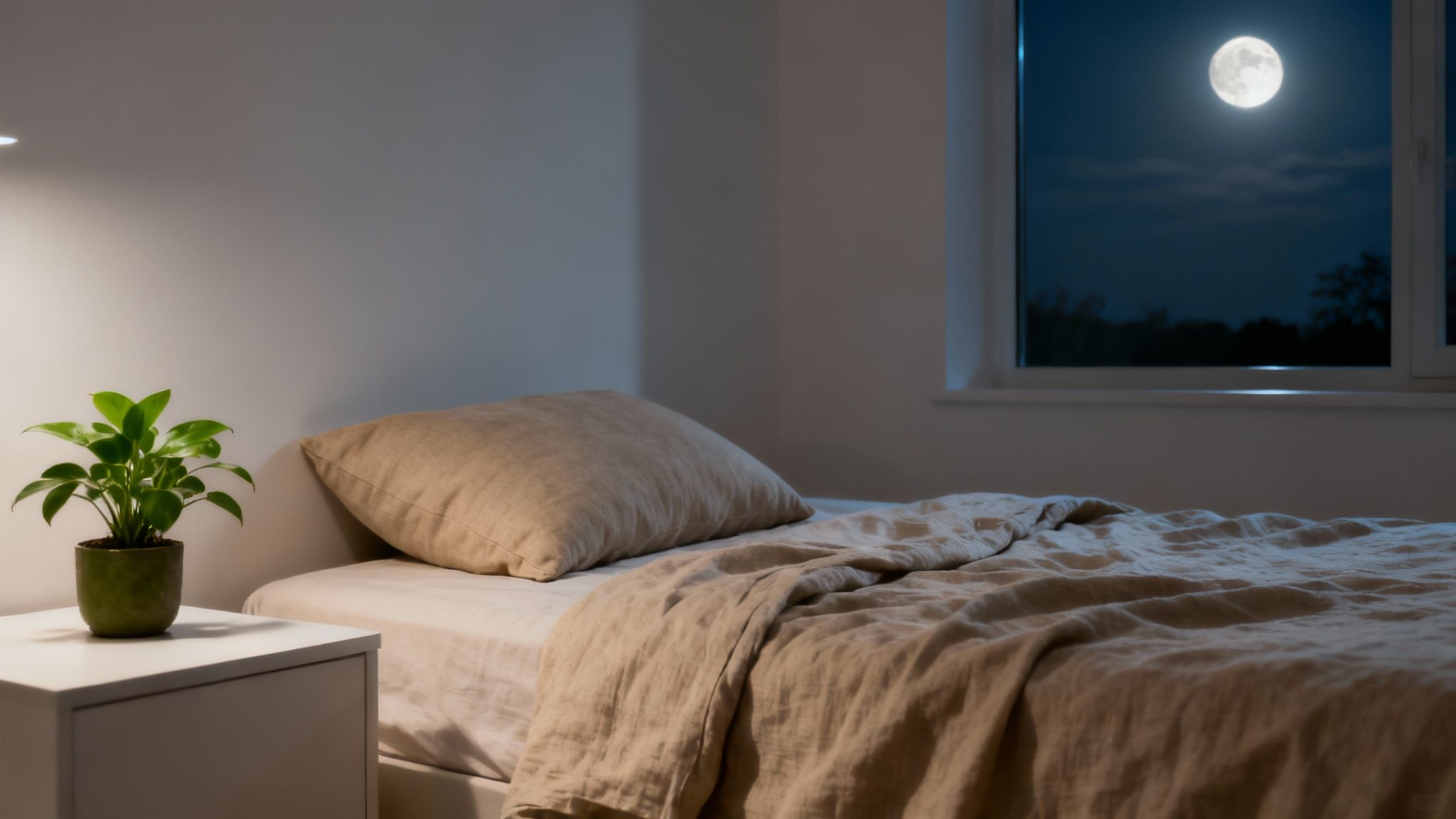
It all starts with an environment designed for good sleep. Every element, from room temperature to bedding fabric, affects the quality of your night.
Create the ideal microclimate
Optimal temperature is one of the most important, yet often completely ignored, factors. Scientists agree that we rest best in a cooler room. Ideally, the thermometer should read between 18 and 21 degrees Celsius. Before going to bed, open the windows wide and air out the room well so the air is fresh and full of oxygen.
Complete darkness is just as important. Even the smallest light source—a tiny glow from a phone charger or streetlight seeping through the window—can disrupt melatonin (the sleep hormone) production.
Investing in blackout curtains can be one of your best decisions. They not only ensure total darkness but also effectively muffle noise from outside.
The bed is for sleep only
Strict but true: remove everything from your bedroom that distracts you, especially items related to work or entertainment. The TV, computer, even a big pile of books on your nightstand can send the wrong signals to your brain. Your bed should be associated with only two things: sleep and intimacy.
If you like to read before bed, do it in an armchair in another corner of the room, not in bed. This will strengthen the psychological association that getting into bed means it’s time to sleep, not to be entertained.
Bedding—your second skin
Finally, pay attention to what touches your skin all night long. Quality bedding makes a huge difference to sleep comfort. Choose natural, breathable fabrics like cotton. Synthetics often “don’t breathe,” so you may overheat and sweat at night, which definitely doesn’t help you sleep deeply.
- Cotton sateen: Soft, smooth, and incredibly pleasant to the touch, this fabric regulates temperature perfectly.
- Cotton fabric: A durable and long-lasting choice. Best of all, it gets softer with every wash.
Properly chosen bedding not only improves comfort but also helps maintain a stable body temperature. You can read more about how to choose the right bedding in our guide to cotton bedding sets. And of course, don’t forget a comfortable pillow and mattress—these are long-term investments in your health.
Even though sleep problems can sometimes seem insurmountable, simple changes to your environment can make a big difference. By creating a peaceful oasis in your bedroom, you’ll take a solid step toward better quality rest.
When is it time to seek help?
While many sleep difficulties can be solved by adjusting your habits and creating a calmer environment, it’s important to recognize—sometimes that’s not enough. Self-help is great, but there comes a time when insomnia turns from a temporary inconvenience into a chronic problem. That’s when you need a specialist’s intervention.
Ignoring long-lasting sleep disorders is like driving a car with the engine warning light on and hoping it will turn off by itself. The best thing you can do is recognize the more serious signals in time and seek qualified help.
Clear signs it’s time to stop waiting
If you recognize yourself in any of these points, it’s worth seriously considering a visit to a specialist. Remember, this is not a sign of weakness, but of taking responsibility for your health.
When should you be concerned?
- Persistent insomnia. Do you have trouble falling asleep, wake up often at night, or wake up far too early? If this happens three or more times a week and lasts longer than three months, it’s serious.
- Your daytime quality suffers. You constantly feel tired, it’s hard to concentrate at work, you’re irritable or apathetic. If insomnia is clearly affecting your productivity, relationships, and overall quality of life—it’s time to act.
- You’ve tried everything, but nothing helps. You’ve already applied all the sleep hygiene and relaxation methods described in this article, but still don’t notice significant improvement.
Chronic insomnia isn’t just “bad sleep.” It’s a serious medical disorder that can increase the risk of other health problems—from heart and vascular diseases to diabetes or depression.
Where to start your journey to better sleep?
The first and most logical step is a visit to your family doctor. They will assess your overall health, rule out possible physical causes (such as thyroid disorders or sleep apnea), and, if needed, refer you to the right specialist.
Your family doctor may recommend seeing:
- A psychotherapist or psychologist. Especially if you think your insomnia is triggered by stress, anxiety, or depression.
- A sleep specialist (somnologist). This is a doctor specializing in sleep disorders who can conduct thorough sleep studies and determine the exact cause of the problem.
Cognitive behavioral therapy for insomnia (CBT-I)
One of the most effective, science-based ways to overcome chronic insomnia without medication is cognitive behavioral therapy for insomnia (CBT-I). This is a specialized form of psychotherapy that helps change thoughts and behaviors that harm your sleep.
Instead of just suppressing symptoms with medication, CBT-I looks for the root of the problem. During therapy, you learn to recognize and change anxiety-provoking thoughts (for example, “If I don’t fall asleep now, tomorrow will be a disaster!”). Behavioral strategies are also used, such as sleep restriction or the strict “20-minute rule,” which help restore a healthy connection between bed and sleep.
Don’t settle for poor sleep. Professional help can be the key to peaceful nights and much more energetic days.
Frequently asked questions about insomnia and sleep
Even when it seems like we’ve tried everything, questions still linger. What if…? Does this work for me? That’s completely natural. In this section, we’ll answer the questions people with sleep problems ask most often—maybe it will help clear up your doubts too.
Are sleeping pills a good solution?
Sometimes, during particularly tough periods—like high stress at work or the loss of a loved one—doctor-prescribed sleeping pills can be a temporary aid. Emphasis on temporary. They are definitely not a long-term solution for insomnia.
With prolonged use, these medications carry a risk of dependence, and their effectiveness diminishes over time. Today, specialists always prefer non-medication approaches. One of the most effective is cognitive behavioral therapy for insomnia (CBT-I), which helps change habits and thought patterns that disrupt sleep.
Golden rule: never, ever start taking sleeping pills on your own. For any medication, always consult your doctor. Only they can assess your condition, choose the right treatment, and warn you about possible risks.
What should I do if I wake up in the middle of the night?
Your eyes suddenly open, and there are still hours until your alarm… This is probably one of the most frustrating forms of insomnia. The most important thing at this moment is not to panic. Don’t look at the clock, and definitely don’t count how much sleep you have left. That will only spiral your anxiety and make it even harder to fall back asleep.
If sleep doesn’t return in about 15–20 minutes, simply get out of bed. Leave the bedroom and go to another room with dim, warm lighting.
- Do something calming. You can read a book (nothing too intense!), listen to soothing instrumental music, or just sit quietly.
- No screens. Phone, computer, or TV—these are the biggest enemies. Blue light sends a clear signal to your brain: “Time to get up!”
- Return to bed only when you feel sleepy. This practice helps restore the right association: the bed is for sleep, not anxious tossing and turning.
Will a short daytime nap make up for a bad night?
There’s no one-size-fits-all answer—it depends on your situation. If insomnia only visits you occasionally, a short nap of about 20–30 minutes in the first half of the day can be refreshing and give you energy.
However, if you’re struggling with chronic insomnia, most sleep specialists will advise against daytime naps. Why? Because it reduces the so-called “sleep pressure”—your body’s natural need to sleep at night. This can make it even harder to fall asleep in the evening. Even if the day is tough, it’s better to push through until bedtime. That way, you’ll feel more tired and your night’s sleep will be deeper and better quality.
Your sleep quality depends directly on the environment where you rest. The Rustilės team believes that hand-sewn, natural cotton bedding can turn your bed into a true oasis of calm. Discover comfort that will help you drift off into deep, restorative sleep faster. Visit our store at https://rustile.lt and choose your dream bedding.
Leave a comment